Procurement Scenarios
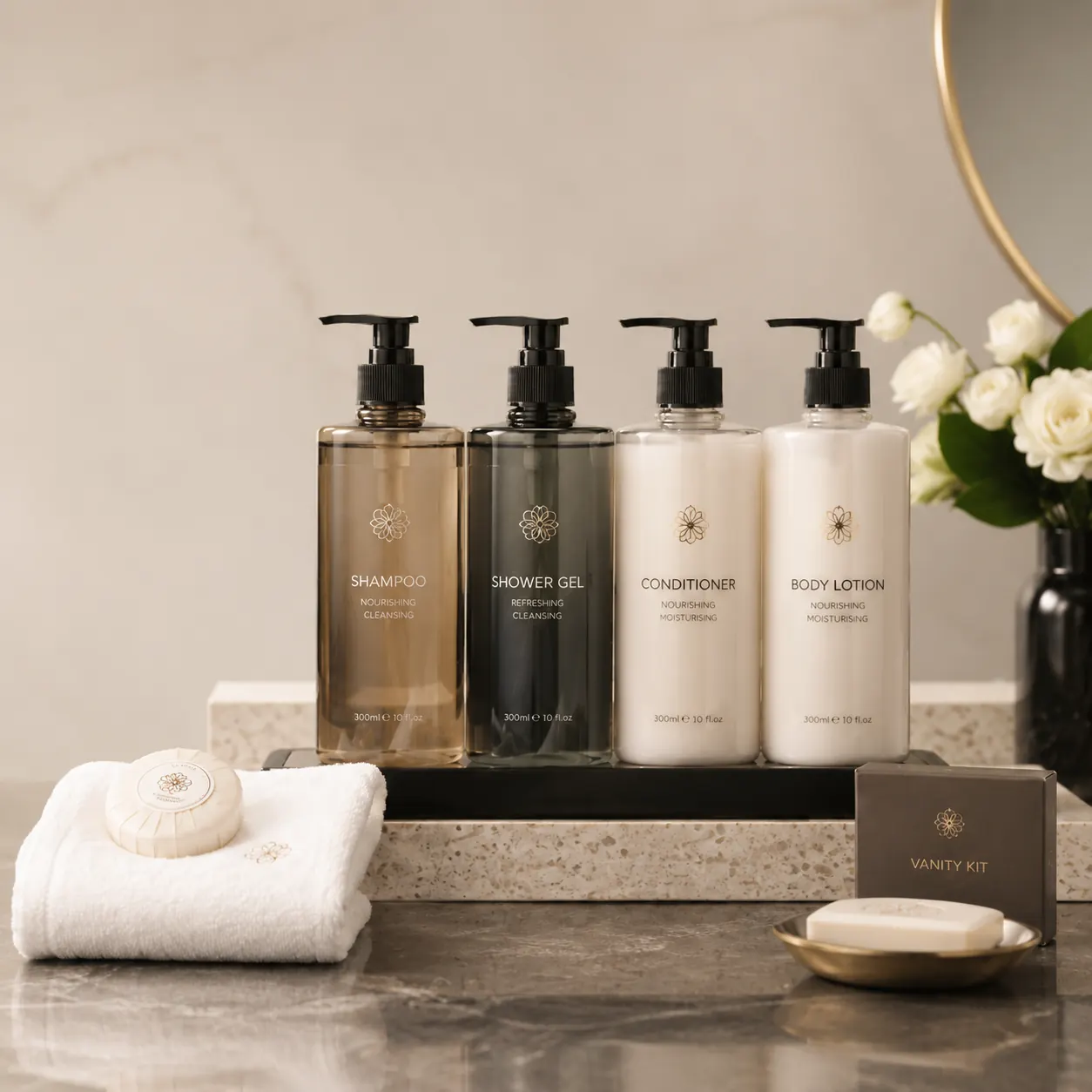
Hotel toiletries procurement needs typically come from different types of accommodation. Hotel groups focus on unified standards across properties and bulk supply; boutique hotels and hostels value how fragrance and bottle shape express brand identity; serviced apartments and chain accommodation balance cost control with the in-room experience. Distributors and private-label brands also include hotel toiletries in their own product lines through the OEM/ODM route.
Each scenario has very different requirements for sizes, packaging and customization. We recommend clarifying the usage scenario and sales channel before requesting a quote, so the supplier can propose a more relevant project direction.
Toiletry Categories and Size Selection
Hotel toiletries usually include shampoo, body wash, conditioner, body lotion and hand wash. Based on in-room usage, sizes fall into three groups:
- Small guest room sizes: common 20ml–40ml tubes or bottles, suited to single-use in-room amenities and hygiene management.
- Mid-size pump bottles: common 300ml–500ml pump bottles, suited to multi-night stays and a popular choice for boutique hotels and hostels.
- Bulk refill packs: 5L and 20L packs, suited to refill dispensing or back-of-house filling, helping reduce per-room cost.
Hand wash is usually sourced alongside toiletries, available as small in-room sizes or pump bottles for public areas. The exact size mix should be confirmed based on room count, occupancy and restock cycles.
Existing vs Custom Formulas
In OEM/ODM projects, formulas generally follow two directions:
- Existing formulas: built on the supplier's mature formula system, with relatively fixed fragrance and base texture, shorter sampling lead time, suited to projects that need a fast launch or have limited personalization needs.
- Custom formulas: developed around brand positioning for fragrance, texture, appearance and feel, requiring more discussion and multiple sampling rounds, suited to projects with clear brand differentiation needs.
The two directions differ in development cycle and cost. The specific plan, adjustable formula scope and related investment need to be confirmed per project.
Fragrance, Size, Bottle, Label, Silkscreen and Box Confirmation
Custom packaging involves several visual and specification elements, usually confirmed in this order:
- Fragrance confirmation: select from the supplier's fragrance library or propose a custom direction;
- Size confirmation: determine single-bottle size and set combinations based on in-room usage;
- Bottle confirmation: choose from existing tubes, PET bottles or pump bottles, or discuss a mould direction;
- Label / silkscreen confirmation: confirm brand logo, text content, layout and colour, distinguishing between label and silkscreen processes;
- Box confirmation: confirm whether an outer box, gift box or set box is needed, plus printing and material direction.
After each item is confirmed, keep a written record or a sealed sample as the basis for bulk production.
Sampling, Confirmation, Production, QC, Packing and Delivery
A complete hotel toiletries OEM/ODM project typically goes through these stages:
- Requirement discussion and sampling: confirm categories, sizes, fragrance and packaging direction, then arrange samples;
- Sample confirmation: the customer confirms or requests adjustments to texture, fragrance, appearance and packaging;
- Bulk production: produce in bulk based on confirmed samples, with clear quantity and schedule;
- Quality inspection: carry out appearance, fill volume and packaging checks during production and at the finished-goods stage;
- Packing and labelling: complete labelling, silkscreen, outer boxes and carton packing, verifying label information;
- Shipment and delivery: deliver according to the agreed method and timeline.
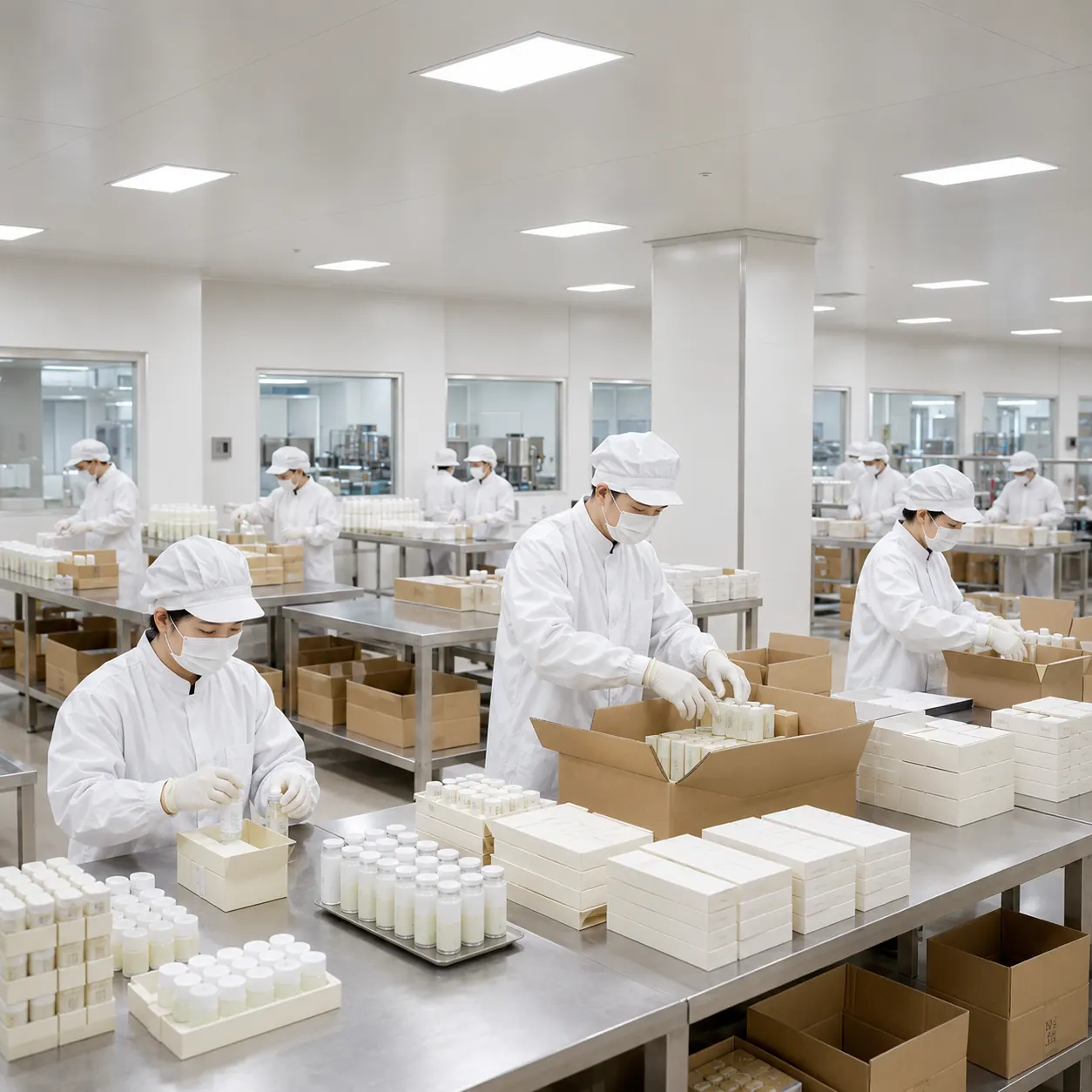
The specific execution standards, inspection items and delivery details for each stage need to be confirmed against the order. Specific MOQ, lead time and pricing need to be confirmed based on the actual project.
Information to Prepare Before Requesting a Quote
To make the inquiry more efficient, we recommend preparing the following before sending an RFQ:
- Usage scenario (hotel, hostel, apartment, chain accommodation or distribution channel);
- Required product categories and estimated quantity;
- Target size (small sizes, 300–500ml or bulk packs);
- Packaging direction (existing bottle / custom bottle, label / silkscreen, whether an outer box is needed);
- Fragrance preference (existing fragrance or custom fragrance);
- Brand materials (brand name, logo files, target market);
- Target delivery timeline and destination-market compliance requirements.
OEM/ODM Project FAQ
Q: Can the products be fully customized to our brand?
A: Yes. OEM/ODM projects support customizing brand logos, bottle selection, label and silkscreen, and outer box design on toiletries. The exact customizable scope needs to be confirmed per project.
Q: How do I choose between existing and custom formulas?
A: Existing formulas suit fast launches and cost-sensitive projects; custom formulas suit projects with clear brand differentiation needs. The two directions have different development cycles, so choose based on brand positioning.
Q: Are bulk refill packs available?
A: 5L and 20L bulk packs are supported, suited to refill dispensing or back-of-house filling scenarios.
Q: Are samples charged?
A: Sample policy needs to be confirmed through project discussion; in some cases existing-formula samples can be provided for reference.

Start Your Hotel Toiletries OEM Project
To learn more about products, OEM/ODM services or factory capabilities, reach out through the links below.